HPRC Project Capercornious
The high power rocket club (HPRC) builds a rocket and payload every year to compete at the Spaceport America Cup. The rocket is tasked with flying a payload to exactly 10,000 ft and the payload can have just about any mission we choose. This year the payload was a 10x10x70 cm steerable parachute lander.


After the rocket launches and its parachutes open, the payload ejects away from the rest of the rocket and falls under its own special parachute. The payload is capable of pulling in, or reefing, the parachute lines which deformed the parachute, creating some lift, allowing the payload to steer. An on board camera which is stowed during flight, flips out and looks at the ground after the payload ejects. The camera uses computer vision to find a clear location for the payload to land, and then relayed that GPS location to the control system which stears the payload to the location.
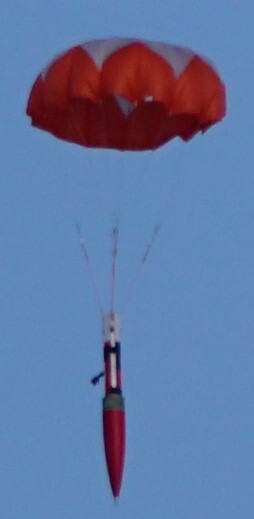

My Role:
Payload Recovery Subteam:
I led the Payload Recovery team, a group of 7 people in charge of developing and testing the parachute, and building the system to eject the parachute. As the Payload Recovery lead I taught the team, composed primarily of first years, the basics of SolidWorks, designing for manufacturability, and static analysis of assembly. As a team we performed in depth research into parachute dynamics to choose the ideal parachute and then designed and built parachute test stands. I taught the group how to do precision sewing so that we could modify the parachute and lines to allow them to be controlled.


Payload Division lead:
In the Spring I took over as the entire Payload Division lead, taking charge of the entire payload project. I worked with over 45 people to integrate the separate payload subsystems together, picked up slack and projects that got left behind, and coordinated testing and design requirements with the rocket and program divisions. I integrated the outer structure with the parachute actuation system and recovery hardware, worked with the programming team to integrate their custom boards to the structure, worked to reduce mass and identify and eliminate failure points. Additionally I led extensive testing campaigns to make sure the payload was safe to eject from the rocket. I put together a meter diameter, six propeller drone (named Big Bird) to test the payload shown in figure N.

